Deep-Cleaning Solutions for Commercial Floor Machines

Keeping commercial floors consistently clean is a constant challenge, especially in facilities with heavy foot traffic, textured surfaces, and grout lines. Even with a solid cleaning schedule, soil can build up in low points and uneven areas, leaving floors looking dull and worn. To solve this, many facility teams are rethinking the tools they use with their floor machines and looking for deeper, more efficient cleaning solutions.
Why Traditional Methods Often Fall Short
Flat pads and standard accessories work well on smooth, level floors, but they struggle as soon as the surface becomes textured or irregular. Soil, grease, and debris tend to settle into grout lines, safety flooring, and rough finishes where a flat pad simply cannot reach. Operators may respond by making extra passes or increasing chemical use, but this raises labor time and costs without guaranteeing better results.
Another common issue is frequent pad changes. When pads load up or wear out quickly, teams must stop machines, flip or replace pads, and then restart the process. Over an entire shift or week, this stop-and-go workflow can significantly reduce productivity.
The Role of Advanced Attachments in Deep Cleaning
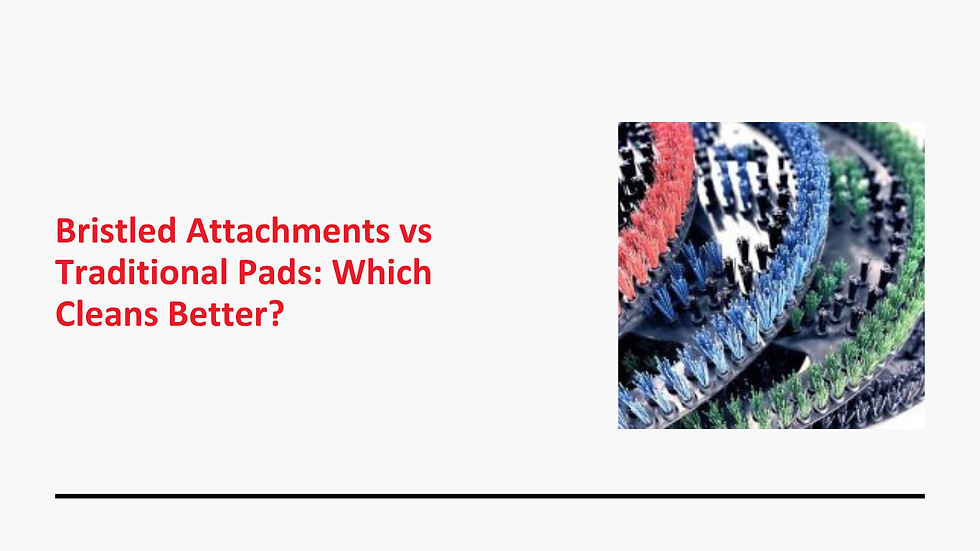
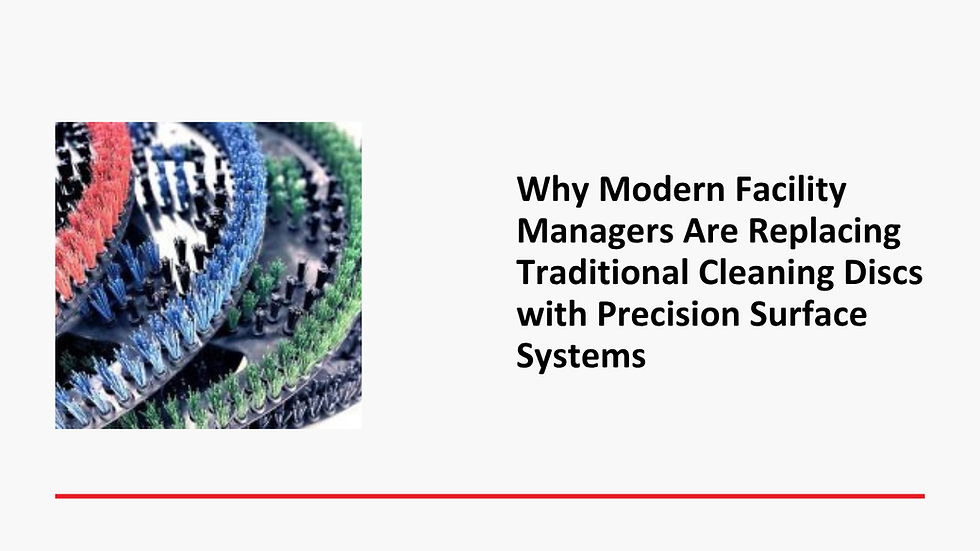
Modern deep-cleaning solutions focus on improving mechanical action at the floor level. Instead of relying solely on chemistry or repeated passes, these tools are designed to physically reach into the low points of the floor and dislodge soil. Bristled attachments, in particular, offer a unique combination of scrubbing power and flexibility that traditional flat pads cannot match.
By using thousands of small contact points, bristle-based tools can conform to uneven surfaces and get into grooves, textures, and grout lines. This allows commercial floor machines to deliver a more uniform clean across a variety of floor types, from restrooms and locker rooms to lobbies and production areas.
This is where high-quality floor polisher pads designed for deeper agitation can play a strategic role in a facility’s maintenance program.
Matching Deep-Cleaning Solutions to Machine Types
Every facility has its own mix of equipment, and effective deep-cleaning solutions must work across multiple machine types. Single-disc machines in the 175–350 RPM range, auto scrubbers, ride-on units, and orbital machines all require compatible tools that can attach quickly and stay secure during operation.
Bristled accessories are often engineered to work with existing pad drivers, minimizing the need to replace or retrofit core equipment. With the right adaptor or coupler, operators can switch between different tools in seconds and choose the best option for each floor type or task. This flexibility supports both daily maintenance and periodic deep-cleaning projects without disrupting workflows.
Some solutions also act as hybrid tools, offering the ease of a pad with the cleaning power of a brush. This helps teams standardize on fewer SKUs while still addressing very different floor conditions throughout a building.
Solving Labor, Budget and Sustainability Challenges
Labor and budget pressures are a daily reality for many facility managers. Teams are often asked to maintain large areas with fewer staff, making efficiency critical. Deep-cleaning attachments that last significantly longer than traditional options can reduce the frequency of replacements and lower the total cost of ownership.
Longer-lasting tools also translate into less downtime. When operators no longer need to stop frequently to flip or change pads, they can cover more area in the same amount of time. This improved productivity is especially valuable in high-traffic spaces that must be cleaned during off-hours or within tight scheduling windows.
From a sustainability perspective, more durable accessories generate less waste and can help reduce chemical usage. When mechanical action improves, teams can often achieve the same or better results with fewer chemicals and less water, supporting environmental goals without sacrificing cleanliness.
Many facilities achieve these gains by standardizing on durable pads for floor buffer machines that are engineered specifically for extended life and consistent performance.
Putting Deep-Cleaning Solutions into Practice
Implementing better deep-cleaning methods starts with a clear assessment of current results. Facility teams can walk their buildings and identify areas where floors consistently look dull, stained, or unevenly cleaned. Common problem zones include entries, restrooms, cafeterias, and any location with textured or safety flooring.
Once those hotspots are identified, the next step is to pilot advanced attachments in a few key areas. By tracking labor time, chemical usage, and visual appearance before and after the change, managers can quickly see the impact of upgraded tools. This data also makes it easier to justify broader rollouts across multiple buildings or regions.
When teams combine the right equipment, smart chemical use, and high-performance attachments, commercial floor machines can consistently deliver deep cleaning that is faster, more predictable, and more sustainable.
FAQs
1. What types of floors benefit most from deep-cleaning attachments?
Deep-cleaning attachments are particularly effective on tile and grout, textured surfaces, safety flooring, and heavily trafficked areas. These surfaces tend to trap soil below the level that flat pads can reach, so tools with more aggressive or bristled contact points usually deliver better results.
2. Can I use deep-cleaning attachments on my existing floor machines?
In many cases, yes. Most modern deep-cleaning accessories are designed to work with common machine types and speeds, often connecting through universal adaptors or pad drivers. Always verify compatibility with your equipment specifications before first use.
3. Will deeper cleaning increase my chemical usage?
Not necessarily. Because advanced attachments improve the mechanical action at the floor surface, you may be able to maintain or even reduce chemical usage while achieving better results. Many facilities see improvements in both appearance and sustainability when they upgrade tools rather than simply increasing product dosage.
4. How do deep-cleaning solutions impact labor and maintenance costs?
More efficient tools can decrease the number of passes, reduce the need for frequent pad changes, and cut overall cleaning time. This helps teams complete more work with the same staff and can lower long-term costs associated with consumables, overtime, and equipment wear.

Comments